


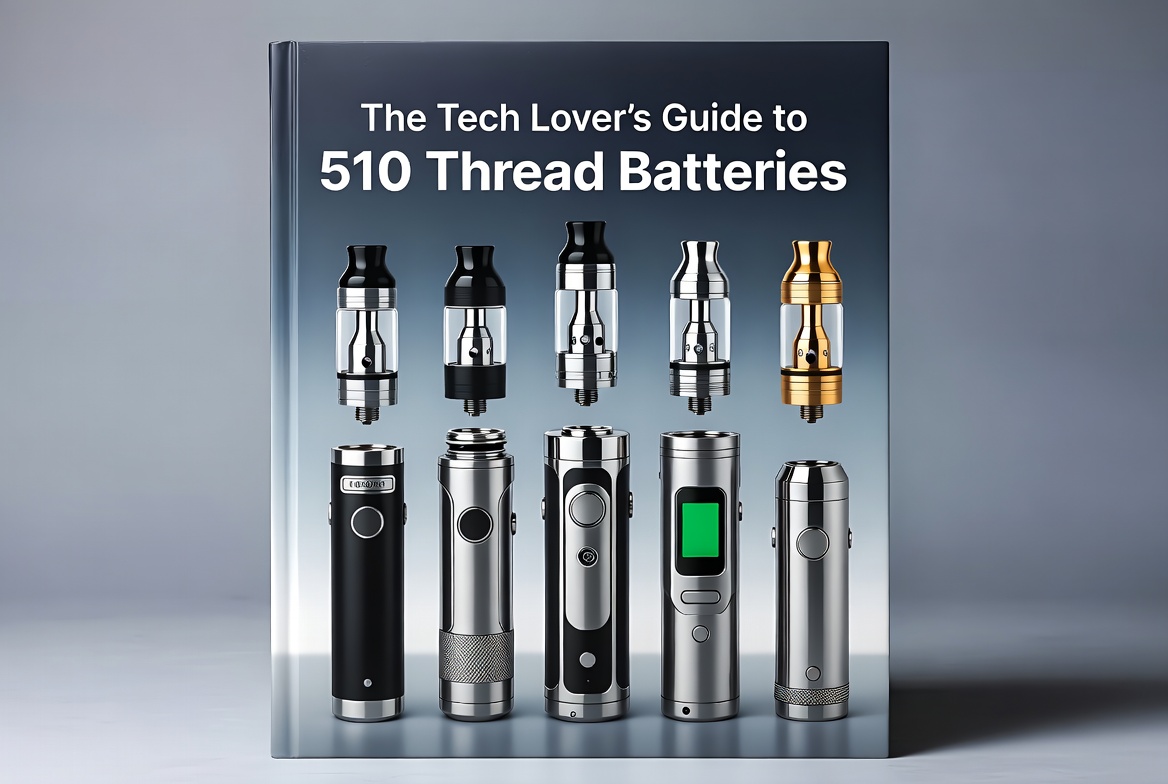
510 threading represents universal vaporizer standard enabling interchangeable cartridge compatibility across battery platforms ranging from basic buttonless models to sophisticated devices featuring variable voltage, preheat functions, and display screens for precise temperature control.
Sean-D | 10 Year Hemp Industry CEO and Expert
Last Updated: December 2025
Understanding 510 Thread Specifications
The 510 designation derives from thread dimensions: 5mm diameter, 0.5mm thread pitch. This standardization emerged from early e-cigarette development, establishing universal connection protocol allowing cartridges from any manufacturer to function with compatible batteries.
Modern 510 batteries range from 280mAh disposable pens to 1100mAh capacity devices supporting extended use between charges. Battery capacity directly correlates with usage duration—higher mAh ratings provide more heating cycles before requiring recharge through USB-C or micro-USB connections.
💡 Pro Tip: Sativa-dominant terpene profiles preserve better at lower voltage (2.4-2.8V) preventing terpene degradation through excess heat. Pairing a zesty Green Crack cartridge and 510 batteriescitrus terpenes like limonene and terpinolene that volatilize above 350°F.
Battery Technology Comparison
| Battery Type | Key Features | Best For |
|---|---|---|
| Buttonless draw-activated | Simplicity, no controls, fixed voltage | Beginners, discreet use |
| Variable voltage | 2.0-4.0V range, customizable experience | Flavor optimization, heavy users |
| Digital display | Precise temp control, usage tracking | Tech enthusiasts, exact dosing |
| Preheat function | Warms oil before use, prevents clogs | Thick distillate, cold climates |
Voltage Settings and Terpene Preservation
Different cannabinoids and terpenes volatilize at specific temperatures requiring voltage adjustment for optimal vaporization. THC vaporizes at 315°F while CBD requires 356°F. Terpenes demonstrate even wider range: limonene (349°F), pinene (311°F), linalool (388°F), caryophyllene (266°F).
Lower voltage settings (2.4-2.8V) produce cooler vapor preserving delicate monoterpenes while requiring longer draws. Higher voltages (3.2-4.0V) create denser vapor with faster cannabinoid delivery but risk terpene combustion degrading flavor and aroma profiles.
Optimizing Battery Performance
☐ Start at lowest voltage and increase gradually to preference
☐ Clean connection points monthly with isopropyl alcohol
☐ Store batteries at 40-60% charge for longevity
☐ Avoid overnight charging reducing battery lifespan
☐ Use preheat function in cold environments (below 60°F)
Ceramic vs Wick Heating Elements
Cartridge heating element composition significantly impacts vapor quality and flavor. Ceramic coils provide even heat distribution, superior flavor preservation, and longer lifespan compared to traditional cotton wick designs. However, ceramic requires higher initial voltage to reach operating temperature.
Advanced ceramic formulations use porous materials increasing surface area for oil absorption while maintaining structural integrity through hundreds of heating cycles. This durability justifies premium pricing for cartridges utilizing medical-grade ceramic heating elements.
Battery Safety and Maintenance
Lithium-ion batteries powering 510 devices require proper care preventing safety hazards. Never charge unattended, avoid extreme temperatures (below 32°F or above 95°F), inspect for physical damage before use, and discontinue use if battery becomes hot during operation or shows swelling.
Battery degradation occurs through charge cycles—devices typically maintain 80% capacity through 300-500 full charge cycles before performance decline. Partial charging (keeping battery between 20-80%) extends overall lifespan compared to repeated full discharge cycles.
Portability and Design Considerations
Form factor ranges from slim pen-style batteries (0.4″ diameter) to box-mod designs (1.5″ width) trading portability for features and battery capacity. Pocket-friendly designs prioritize discretion while larger devices offer extended battery life, digital displays, and advanced controls.
Premium devices incorporate magnetic cartridge connections eliminating thread wear, USB-C fast charging reducing downtime, and automatic shutoff preventing accidental activation. These features justify higher initial investment for frequent users.
Technology Enhances Vaporization Experience
Understanding voltage-temperature relationships, heating element composition, and battery maintenance optimizes cannabinoid delivery, terpene preservation, and device longevity through informed hardware selection.
Frequently Asked Questions
What voltage setting is best for THC cartridges?
Start at 2.4-2.8V for terpene preservation and flavor optimization. Increase gradually to 3.2V maximum if vapor production feels insufficient. Higher voltages (3.5-4.0V) risk terpene degradation and harsh throat hit despite increased vapor density.
How long do 510 batteries typically last?
Quality devices maintain 80% capacity through 300-500 charge cycles (approximately 1-2 years with regular use). Battery lifespan extends through proper charging habits: avoid full discharge, don’t overcharge, and store at room temperature when unused.
Can I use any cartridge with any 510 battery?
Technically yes due to universal threading, but optimal performance requires matching cartridge resistance (ohms) to battery output capabilities. High-resistance cartridges may underperform on low-power batteries while low-resistance cartridges risk burning on high-voltage devices.
Additional Resources
Battery University: batteryuniversity.com – Comprehensive resource on lithium-ion battery technology, safety, and maintenance best practices.
Americans for Safe Access – Vaporization: safeaccessnow.org – Evidence-based information on vaporization methods, temperature science, and harm reduction strategies.
