


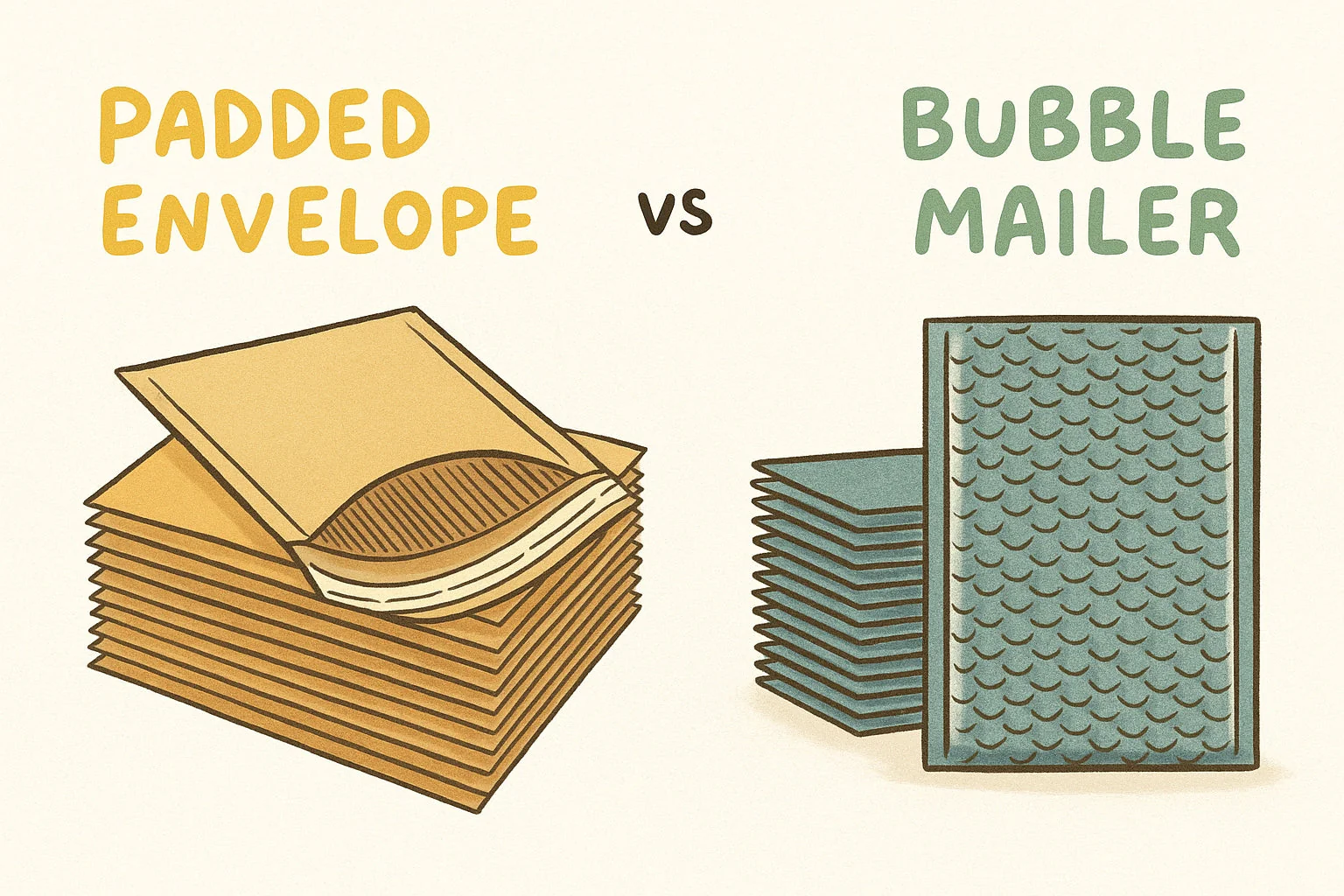
In today’s fast-paced shipping and mailing world, choosing the right packaging can make the difference between a safe delivery and disappointed recipients — whether you’re a small business owner, e-commerce seller, or just someone who ships items occasionally. Two of the most common packaging options you’ll encounter are bubble mailers and regular envelopes. While both serve the purpose of sending items through the mail, they are built for very different uses and offer unique advantages and limitations.
Choosing the right mailing solution not only impacts the safety and security of your item but also affects shipping costs, customer satisfaction, and even your brand’s professional image. In this blog post, we’ll break down everything you need to know about bubble mailers vs. regular envelopes — including what they are, their strengths and weaknesses, when to use each, cost implications, sustainability factors, and real-world recommendations.
Key Highlights
- Bubble Mailers provide padding and protection for fragile items.
- Regular Envelopes are ideal for flat, non-fragile documents and lightweight correspondence.
- Shipping costs can vary based on thickness, weight, and destination.
- Sustainability and recyclability differ between the two.
- Choosing the right option improves delivery safety and customer experience.
What Are Bubble Mailers?
Bubble mailers (also called padded envelopes) are envelopes lined with bubble wrap or other cushioning materials. Unlike standard envelopes, bubble mailers are designed with an inner protective layer that helps absorb shock and protect contents from damage during shipping.
Typical Features of Bubble Mailers
- Padded interior (usually bubble wrap or foam)
- Self-sealing adhesive strip
- Durable outer paper or plastic shell
- Various sizes (from small jewelry shipments to larger padded mailers)
Common Uses
Bubble mailers are perfect for items that need light to moderate protection, such as:
- Small electronics (USB drives, chargers)
- Jewelry and accessories
- CDs, DVDs, and Blu-ray discs
- Specialty printed materials
What Are Regular Envelopes?
Regular envelopes are unpadded paper envelopes used to carry flat, flexible items. They are lightweight and traditionally used for everyday mailing needs.
Typical Features of Regular Envelopes
- Smooth paper exterior
- Usually a gummed or self-adhesive flap
- Minimal thickness
- Available in standard sizes (e.g., #10 business envelope)
Common Uses
Regular envelopes work best for:
- Letters and greeting cards
- Documents and paperwork
- Invoices and bills
- Photographs (non-fragile)
Bubble Mailers vs. Regular Envelopes: Side-by-Side Comparison
Let’s break down the two formats in key areas that matter most when preparing mail or shipments.
1. Protection & Durability
Bubble Mailers
✅ Provide cushioning to protect contents
✅ Resist crushing and minor impacts
✅ Better choice for non-flat or delicate items
Regular Envelopes
⚠️ Minimal to no protection
⚠️ Prone to bending, creasing, and tearing
⚠️ Only suitable for flat, flexible items
Winner: Bubble Mailers — if protection is a priority.
- Shipping Cost Considerations
Shipping cost is influenced by weight, thickness, and dimensions.
Bubble Mailers
- Heavier than regular envelopes due to padding
- May incur higher postage if over a certain thickness
- Often priced mid-range between flat envelopes and boxes
Regular Envelopes
- Extremely lightweight
- Often qualify for the lowest postal rates
- Great for cost-sensitive mailings
Winner: Regular Envelopes — typically lower shipping costs, but only if protection isn’t needed.
3. Ease of Use & Convenience
Both options are designed to be user-friendly, but there are distinctions.
Bubble Mailers
- Easy to seal with peel-and-stick closures
- Can be reused if durable
- Requires more storage space
Regular Envelopes
- Extremely easy to store
- Simple to seal
- Takes up minimal space
Winner: Regular Envelopes — for everyday mailing efficiency.
4. Professional Appearance & Brand Impact
Your packaging often leaves a first impression.
Bubble Mailers
✔️ Look more substantial and premium
✔️ Better for brand promotions and customer unboxing experiences
✔️ Can be customized with printed branding
Regular Envelopes
✔️ Professional for formal letters and documents
⚠️ Not ideal for customer-facing product shipments
Winner: Bubble Mailers — for branded shipments and product deliveries.
5. Sustainability & Environment
If eco-friendliness matters to you (and it should), here’s how each stacks up.
Bubble Mailers
⚠️ Often made with mixed materials (paper exterior + plastic bubbles)
⚠️ Can be difficult to recycle unless specified
⚠️ Some are made from recyclable content, but options vary
Regular Envelopes
✔️ Paper envelopes are generally recyclable
✔️ Require fewer materials
✔️ Lower environmental footprint
Winner: Regular Envelopes — especially plain paper variants.
When to Choose Bubble Mailers
Use bubble mailers when your shipment:
- Contains items that can be bent or easily damaged
- Must arrive intact and protected
- Is part of a customer delivery experience (e.g., products, promotional items)
- Has non-flat shapes or edges
Examples
- Sending handcrafted earrings
- Shipping a USB flash drive with promotional materials
- Mailing a collectible card or DVD
Pro Tip: If your item has a corner or rigid part that could puncture a standard envelope, a padded mailer can dramatically reduce returns due to damage.
When to Choose Regular Envelopes
Choose regular envelopes for:
- Letters, cards, and official correspondence
- Documents that don’t risk bending
- Cost-sensitive bulk mailings where protection is not required
- Situations where postal rates for flats are significantly cheaper
Examples
- Sending an invitation
- Mailing a contract or legal paperwork
- Returning office forms
Cost Breakdown: Bubble Mailers vs. Regular Envelopes
Here’s a general idea of how costs compare — keep in mind actual pricing varies by supplier and region:
| Cost Factor | Bubble Mailers | Regular Envelopes |
| Product Cost (per unit) | Medium | Low |
| Shipping/Postal Rate | Medium–High | Low |
| Protection Savings (avoided re-ship) | High | Low |
| Customization Options | High | Medium |
| Storage Space | Larger | Minimal |
Insight: While bubble mailers cost more up front, they often save money by preventing damage and reshipping — especially important for e-commerce or valuable items.
Eco-Friendly Alternatives & Green Options
Sustainability is becoming essential for many businesses and consumers. Here’s what to consider:
Eco Options for Bubble Mailers
- Recycled paper padded mailers
- Biodegradable bubble liners
- Reusable padded envelopes
Eco Options for Regular Envelopes
- Recycled paper envelopes
- Soy-based inks and FSC-certified materials
- Compostable envelopes
By choosing greener options, you reduce environmental impact while still meeting your mailing needs.
Packing Tips to Maximize Safety and Efficiency
Whether you choose bubble mailers or regular envelopes, here are smart tips:
If Using Bubble Mailers
✔ Ensure the item doesn’t touch the exterior paper directly
✔ Add extra padding around corners
✔ Use size-appropriate mailers (avoid compressing items)
If Using Regular Envelopes
✔ Use rigid flat mailers for documents to prevent bending
✔ For photos or certificates, consider cardboard backing
✔ Seal edges thoroughly to avoid opening in transit
Real-World Use Cases
Let’s break down specific scenarios where one clearly outperforms the other.
1. E-commerce Order Fulfillment
- Best Choice: Bubble mailers
- Why: Provides protection, enhances unboxing experience, looks professional.
2. Corporate Legal Mailings
- Best Choice: Regular envelopes
- Why: Clean, formal, and cost-effective for documents.
3. Mailing Promotional Swag
- Best Choice: Bubble mailers
- Why: Keeps items intact and aligns with brand presentation.
4. Bulk Office Correspondence
- Best Choice: Regular envelopes
- Why: Low cost and sufficient for letters.
Final Verdict: Bubble Mailers vs. Regular Envelopes
There’s no “one-size-fits-all” answer — each has a role in your mailing strategy.
✔ Choose Bubble Mailers when you need protection, presentation, and peace of mind.
✔ Choose Regular Envelopes when you need simplicity, low cost, and recyclability.
The smarter choice depends on what you’re sending, how fragile it is, your branding expectations, and your shipping budget. If you combine both intelligently — for example, bubble mailers for products and regular envelopes for official correspondence — you maximize efficiency and customer satisfaction.
Conclusion: Make the Right Choice for Your Needs
Understanding the difference between bubble mailers and regular envelopes empowers you to choose packaging that protects your items, controls costs, and reinforces your brand identity. While regular envelopes remain essential for simple, lightweight mailings, bubble mailers are indispensable when safety and presentation matter.
Whether you run an online store, manage office correspondence, or ship rarely, knowing when to use each can save money, prevent damage, and enhance your mailings’ overall effectiveness.
