


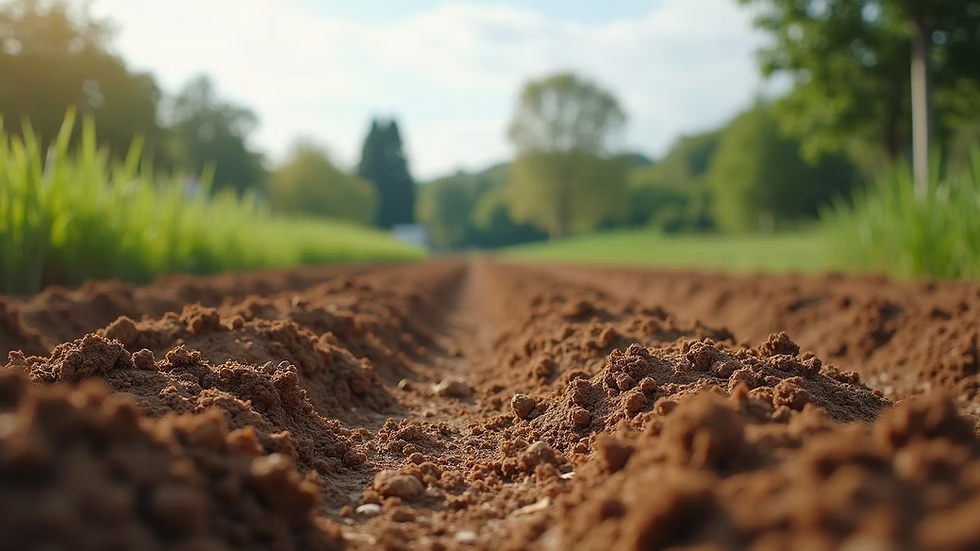
Clearing land is often the first step in preparing for construction, farming, landscaping, or development projects. However, doing it the wrong way can permanently damage soil structure, reduce fertility, increase erosion, and make future land use far less productive. The good news is that with the right approach, you can clear land efficiently while keeping the soil healthy and intact.
Why Soil Protection Matters During Land Clearing
Soil is not just dirt—it is a living ecosystem filled with microorganisms, organic matter, and nutrients that support plant life. When soil is disturbed excessively or stripped of its top layer, it can take decades to recover. Poor land clearing practices often lead to:
- Soil erosion from wind and rain
- Loss of topsoil (the most fertile layer)
- Compaction that prevents root growth
- Reduced water absorption
- Long-term land degradation
Protecting soil during clearing ensures the land remains usable and productive in the future.
Start with a Land Assessment
Before any clearing begins, inspect the land carefully. Identify:
- Areas with rich topsoil
- Slopes prone to erosion
- Existing vegetation worth preserving
- Drainage patterns and water flow
A proper assessment helps you decide which areas need minimal disturbance and which require more intensive clearing.
Use Selective Clearing Instead of Total Removal
One of the most effective ways to protect soil is selective clearing. Instead of removing everything, only clear what is necessary. For example:
- Keep mature trees that stabilize soil
- Preserve ground cover plants where possible
- Remove only invasive or unwanted vegetation
This method reduces soil exposure and keeps natural root systems intact, which helps prevent erosion.
Avoid Heavy Machinery Damage
Heavy machinery like bulldozers and excavators can compact soil severely, especially when used repeatedly in the same area. Compacted soil reduces airflow and water movement, making it harder for future vegetation to grow.
To reduce damage:
- Use lightweight machinery when possible
- Limit vehicle movement to designated paths
- Avoid working on wet soil conditions
Protect the Topsoil Layer
Topsoil is the most valuable part of your land. Instead of removing or mixing it with subsoil:
- Strip and store it separately if excavation is required
- Re-spread it after clearing is complete
- Keep it covered to prevent nutrient loss
This ensures that when you are ready to plant or build landscape features, the soil remains fertile.
Control Erosion During and After Clearing
Once vegetation is removed, soil becomes vulnerable. Prevent erosion by:
- Installing silt fences on slopes
- Using mulch or straw cover
- Creating temporary drainage channels
- Planting fast-growing ground cover plants
These steps help stabilize soil until permanent vegetation grows back.
Use Eco-Friendly Clearing Methods
Whenever possible, choose environmentally friendly clearing techniques such as:
- Manual clearing for small areas
- Mulching trees instead of burning
- Grinding vegetation into natural ground cover
- Avoiding chemical-heavy treatments
These methods return organic matter to the soil instead of stripping it away.
Plan for Soil Restoration After Clearing
Land clearing should always be followed by restoration. This may include:
- Adding compost or organic fertilizers
- Replanting grass or cover crops
- Restoring natural drainage paths
- Testing soil quality before development
Restoration ensures the land remains stable and usable for long-term purposes.
When Professional Help Becomes Necessary
Large or complex projects often require expert handling to avoid soil damage. In such cases, some property owners search for services like land clearing company’s near me to ensure the work is done efficiently while protecting the environment. Professionals typically have the right equipment and knowledge to minimize soil disturbance while completing the clearing process safely.
Final Thoughts
Clearing land does not have to mean destroying soil health. With careful planning, selective clearing, erosion control, and proper restoration, you can prepare land for any purpose while keeping it fertile and stable. Sustainable land clearing is not just better for the environment—it also increases the long-term value and usability of your property.
