


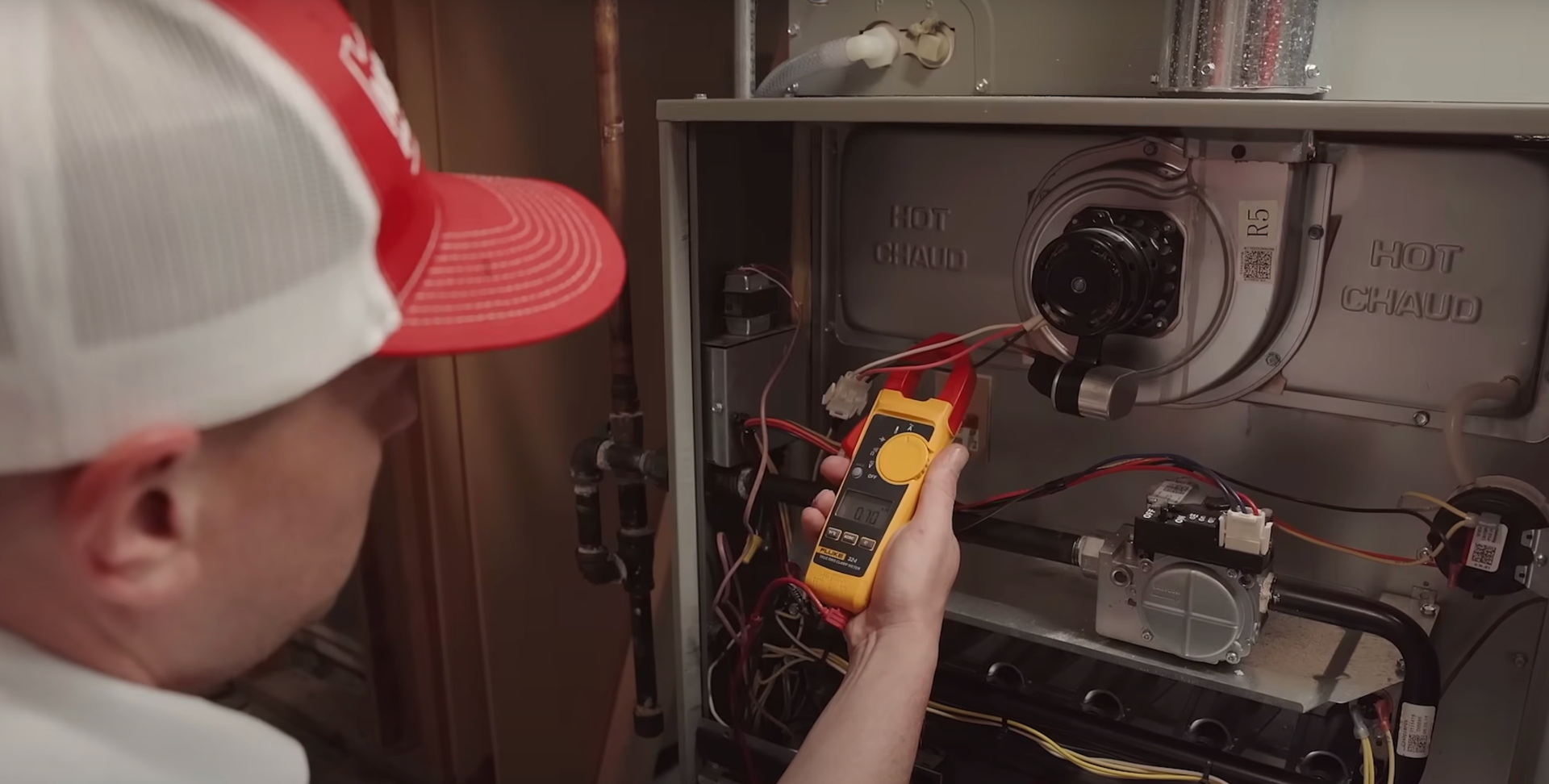
A furnace can appear to start normally, ignite the burners, and then suddenly shut down after only a few seconds. One possible reason is a problem with the flame sensor. This small safety component helps the furnace control system confirm that a burner flame is present. If the expected flame signal is not detected, the system can shut off the gas supply as a safety measure.
For Orange County homeowners, recognizing the signs of a flame sensor problem can help prevent repeated heating interruptions and unnecessary component replacement. Understanding how the sensor works, why it fails, and when professional service is appropriate can make furnace troubleshooting much easier.
What Is a Furnace Flame Sensor?
A flame sensor is typically a small metal rod positioned near the furnace burner assembly. In modern gas furnaces with electronic ignition, it uses flame rectification to provide a small electrical signal to the furnace control system. When the control board receives the expected signal, it can keep the gas valve operating.
If the signal is missing or too weak, the control system may interpret the situation as an unproven flame and close the gas valve. This safety function helps prevent unburned gas from continuing to enter the combustion area.
Common Signs of a Flame Sensor Problem
One of the most recognizable symptoms is a furnace that starts normally but shuts down shortly after the burners ignite. The system may attempt to restart several times before entering a temporary lockout condition.
Other possible signs include repeated short cycles, intermittent heating, flame-related diagnostic codes, or a furnace that produces little or no heat even though the ignition sequence appears to begin normally. However, these symptoms do not automatically prove that the flame sensor itself is defective. Wiring, grounding, burner operation, gas supply, and control-board problems can create similar symptoms.
Why Flame Sensors Become Dirty
Normal furnace operation can eventually leave oxidation or combustion residue on the sensor rod. This buildup can interfere with the small electrical signal used to confirm that the flame is present.
Dust, poor combustion, burner contamination, and other furnace operating conditions can also contribute to recurring flame-sensing problems. If the same problem returns soon after cleaning or replacement, the underlying cause may need further investigation rather than repeated sensor cleaning.
Other Causes That Can Look Like a Bad Flame Sensor
A furnace that lights and then shuts down does not necessarily need a new flame sensor. Several other conditions can produce similar behavior.
A sensor may be positioned incorrectly, the wiring may be loose or damaged, or the furnace may have an inadequate electrical ground. Problems with burner flame carryover, gas pressure, combustion, or the control system can also interfere with flame proving.
This is why proper diagnosis matters. A flame sensor is only one part of the furnace’s flame-sensing system, and replacing it without checking related components may not solve the problem.
Cleaning or Replacing the Flame Sensor
If contamination is the cause, a qualified HVAC technician may be able to clean the sensor and test the furnace afterward. If the sensor is physically damaged, cracked, improperly positioned, or continues to produce problems after appropriate cleaning, replacement may be necessary.
The replacement component should match the furnace manufacturer’s specifications. Flame sensors are not universal, and the correct service procedure can vary between furnace models.
Because the sensor is part of a gas furnace’s safety system, homeowners should avoid bypassing it or making modifications intended to defeat its function.
When Professional Furnace Repair Is Needed
Professional assistance is particularly important when the furnace repeatedly shuts down after ignition, enters a lockout condition, displays an unfamiliar diagnostic code, or continues to malfunction after basic maintenance.
A technician can inspect the flame sensor, wiring, burner operation, grounding, combustion, and other parts of the ignition sequence. This broader diagnosis helps determine whether the sensor is actually responsible or whether another furnace problem is producing the same symptoms.
For homeowners searching for furnace repair Orange County, choosing a qualified HVAC professional can be especially useful when a flame-sensing problem keeps returning or when the furnace involves gas, electrical, or combustion-related components.
Why Ignoring the Problem Can Be a Mistake
A furnace that repeatedly attempts ignition is not operating normally. Continuing to reset the system without determining the cause can leave the underlying problem unresolved.
A malfunctioning flame-sensing system can also prevent the furnace from providing dependable heat. Addressing the issue early may help prevent additional wear associated with repeated ignition attempts and can identify other maintenance concerns before they become larger repairs.
Preventing Future Flame Sensor Problems
Regular furnace maintenance can help identify dirty burners, wiring issues, combustion concerns, and other conditions that may contribute to unreliable operation. Keeping the surrounding furnace area clean and maintaining appropriate airflow can also support normal system performance.
During professional maintenance, the technician can inspect important safety and operating components and follow the manufacturer’s recommended procedures. Annual inspection is commonly recommended for gas furnace systems.
Flame Sensor Problems and Orange County Homes
Orange County homes can have different heating requirements depending on the property, furnace type, age of the equipment, and local conditions. Even when a furnace is used less frequently than in colder climates, components can still accumulate deposits or develop electrical and mechanical problems over time.
A furnace that suddenly begins shutting down after ignition should therefore be investigated rather than assumed to be experiencing a minor thermostat problem. Identifying the actual cause can restore reliable heating while keeping the furnace’s safety controls functioning as designed.
Final Thoughts
A flame sensor may be small, but it plays an important role in the safe operation of many modern gas furnaces. Dirt, oxidation, physical damage, poor positioning, wiring problems, grounding issues, and combustion-related conditions can all affect flame proving.
When a furnace ignites but quickly shuts down, understanding the flame sensor is a useful starting point—but it should not automatically be treated as the diagnosis. Proper inspection and testing can distinguish a dirty sensor from problems elsewhere in the furnace. For persistent issues, professional furnace repair Orange County can help identify the underlying cause and restore dependable heating.
