


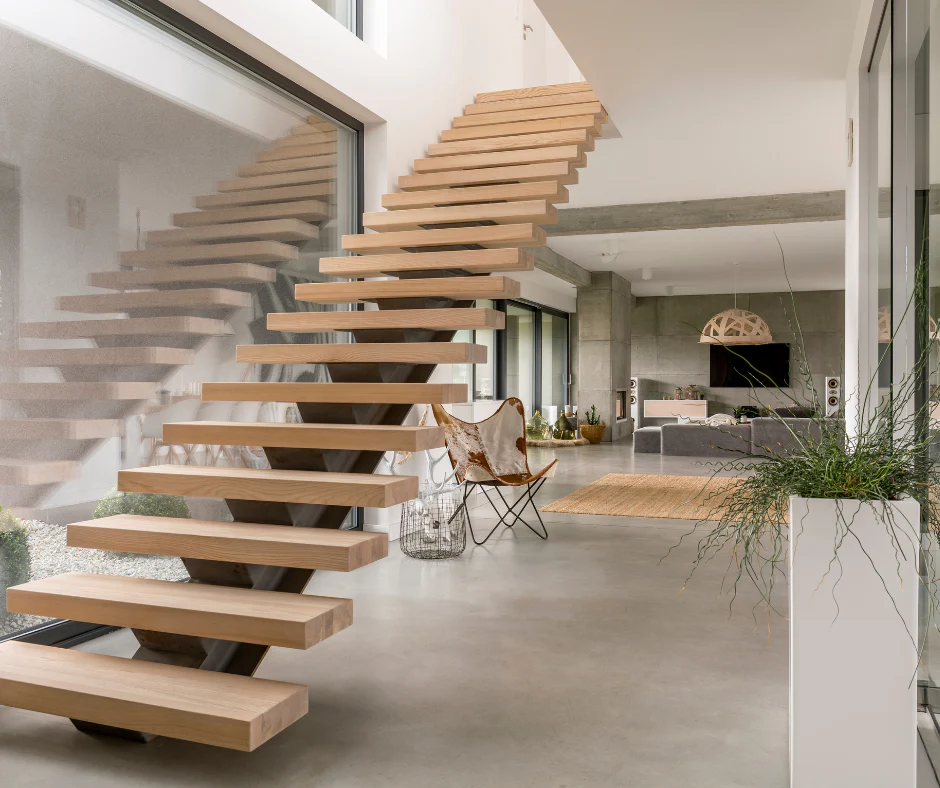
In the hierarchy of interior architecture, the staircase is often the most complex element to execute with precision. For custom homebuilders, architects, and remodeling contractors, the challenge lies in the seamless integration of horizontal and vertical planes. Achieving a “furniture-grade” finish on a high-traffic structural element requires more than just skilled labor; it necessitates the use of high-performance stair treads and risers. When these components are engineered to work in tandem, they provide the structural rigidity needed to eliminate “stair squeak” while offering the visual continuity that modern luxury design demands. By moving toward specialized, pre-milled components, industry professionals can reduce on-site waste and ensure that every step meets the exacting standards of the modern homeowner.
The Anatomy of a High-End Staircase
A successful stair installation is a balance of two distinct but interdependent parts: the tread (the horizontal surface) and the riser (the vertical back). While they serve different functional purposes, their material compatibility is the key to a long-lasting installation.
1. The Tread: Structural Durability
The tread bears the full weight and impact of every step. In professional applications, solid hardwood is the preferred material for its “Janka hardness”—the ability to resist denting and wear.
- Standard Thickness: A 1-1/16″ solid tread is the industry standard for traditional builds, providing enough mass to prevent cupping and allowing for multiple refinishing cycles over the home’s lifespan.
- The Bullnose: The leading edge of the tread is the most visible and vulnerable point. Precision-milled bullnoses ensure a smooth transition and a consistent look across the entire flight.
2. The Riser: The Visual Canvas
While the riser does not bear direct foot traffic, it defines the “face” of the staircase.
- Matching Wood Risers: For a classic, monochromatic look, using the same species (such as White Oak or Walnut) for both the tread and riser creates a solid, sculptural appearance.
- Primed/Painted Risers: A popular trend in transitional and “Modern Farmhouse” design involves pairing hardwood treads with crisp, white-painted risers. This creates a high-contrast look that highlights the beauty of the natural wood grain on the treads.
Overcoming the “Remodel Barrier” with Retrofit Systems
For remodeling contractors, the most common obstacle is the “carpet-to-hardwood” conversion. Traditional treads are too thick to be placed over existing construction without creating a trip hazard by altering the stair’s “rise.”
Modern Retrofit Systems (or Replacement Treads) solve this by featuring a thin-profile body (typically 5/8″) with a full-thickness 1-1/16″ bullnose. This allows the installer to “cap” the existing structural pine stairs with luxury hardwood. When paired with matching thin risers, the result is a total aesthetic overhaul that looks indistinguishable from a newly built staircase, but at a fraction of the structural labor cost.
Material Science: Managing Expansion and Contraction
Wood is a living material that responds to changes in humidity. In a vertical application like a staircase, even minor shifting can lead to gaps or structural noise.
- Kiln-Drying Standards: Professional-grade components are kiln-dried to a consistent 6-8% moisture content, minimizing the risk of warping after installation.
- Edge-Gluing Techniques: High-quality treads are constructed from edge-glued staves of varying widths. This engineering technique actually makes the tread more stable than a single wide slab of wood, as it balances the internal tensions of the grain.
- Prefinishing Advantages: By choosing factory-prefinished treads and risers, installers benefit from UV-cured coatings that are significantly harder than traditional site-applied polyurethane, providing better resistance to the scuffs and scratches inherent to foot traffic.
Coordination for Trade Success
For flooring dealers and retailers, the ability to provide a complete “accessory package” is a major competitive advantage. Clients no longer want “close enough” matches; they want the staircase to be an exact extension of their hardwood flooring. By specifying species, grades (such as Select or Character), and finish levels in a unified package, professionals can eliminate the guesswork that often leads to project delays.
The staircase is the literal and figurative center of the home. Its quality reflects the integrity of the entire build. Achieving a result that is both safe and beautiful requires a partnership with a supplier that understands the technical nuances of the trade. For architects, designers, and builders looking to deliver a superior product, sourcing premium components from Wood Stair Co ensures that every project is built on a foundation of quality. When you prioritize precision in your treads and risers, you transform a simple transition into a lasting architectural legacy.
