


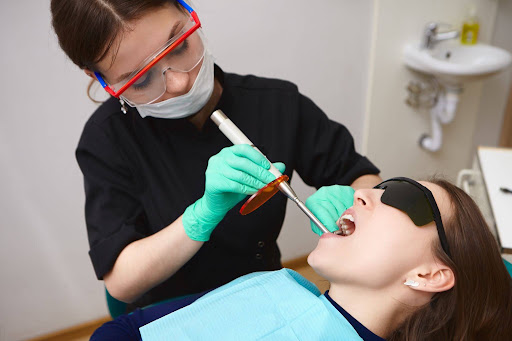
Fluoride treatments tend to get filed away in most people’s minds as something for children; one of things you associate with school dental visits and paediatric check-ups. At Lifestyle Smiles, our dentist Brighton team sees this assumption come up often, and it’s worth correcting, because fluoride treatment can be just as relevant for adults in certain situations, not some\hing you simply age out of.
What Fluoride Treatment Actually Does
Fluoride is a mineral that aids in reinforcing the enamel of the teeth and promotes the process of remineralization, which involves depositing minerals on weakened enamel due to exposure to acids present in food, beverages, or bacteria. The application of fluoride at the dental office usually includes the use of fluoride gel or varnish that is applied to the teeth, providing a much higher concentration than toothpaste or tap water.
This is not about substituting your dental hygiene habits but complementing them.
Why Adults Are Often Told They Don’t Need It
This misconception has its own valid basis since fluoride intake through water fluoridation and fluoride toothpaste makes it unnecessary for many healthy adults to receive any further treatment involving fluoride. There may be no necessity for fluoride treatment in the case of many adults who have no oral problems and a low risk of caries.
However, “not everyone needs it” does not necessarily mean “no adults need it”. There are certain circumstances when fluoride treatment might be recommended by the dentist.
Situations Where Fluoride Treatment Is Often Recommended for Adults
A history of frequent cavities. If you’ve had multiple cavities in recent years, or ongoing issues with decay despite reasonable oral hygiene, additional fluoride may be suggested as part of a broader prevention plan.
Dry mouth (xerostomia). Saliva plays an important role in naturally protecting teeth, and reduced saliva flow — caused by certain medications, some medical conditions, or other factors — can increase the risk of decay. Fluoride treatment is often considered for patients dealing with chronic dry mouth.
Exposed root surfaces. If gum recession has left root surfaces exposed, that area of the tooth doesn’t have the same protective enamel layer, and can be more vulnerable to decay. Fluoride may be recommended to help protect these areas specifically.
Ongoing orthodontic treatment. Braces and other orthodontic appliances can make it harder to clean certain areas of the teeth thoroughly, which can increase decay risk during treatment. Some dentists recommend fluoride treatment as an added preventive measure during this period.
History of radiation therapy to the head or neck. This can significantly affect saliva production and oral health, and fluoride treatment is often part of the broader dental care plan for patients who’ve undergone this kind of treatment.
Existing crowns, bridges, or other dental work near the gumline. Margins around restorations can sometimes be more vulnerable to decay, and fluoride may be suggested as an additional protective measure in some cases.
General high caries risk. Some adults are simply assessed as being at higher risk of decay based on a combination of diet, oral hygiene habits, saliva flow, and dental history, and fluoride treatment may be one part of managing that risk.
What a Fluoride Treatment Appointment Generally Involves
Fluoride treatment in the dentist’s office is usually a fast and simple process that can be done during an ordinary check-up instead of an extra visit. This involves applying fluoride in the form of a varnish or gel directly onto the teeth and leaving it there for a while. You might be told not to eat or drink anything for some time to allow the fluoride to work effectively.
Fluoride Toothpaste vs. Professional Treatment
It’s worth understanding these aren’t the same thing. Fluoride toothpaste, used daily, delivers a lower concentration of fluoride but on a consistent, ongoing basis, which plays an important role in everyday oral care for most people. Professional fluoride treatment delivers a higher concentration in a single application, generally used for a specific preventive purpose rather than as a replacement for daily brushing with fluoride toothpaste. The two work together rather than one substitute.
Is It Right for You?
Fluoride treatment is suitable for certain individuals based on personal risk factors, dental history, and possible medical factors. There are risk factors that you may not notice yourself because they require a thorough examination, such as dry mouth or visible roots of your teeth. The best way to find out if fluoride treatment will help you is to ask the dentist about it at your next appointment.
The specialists from Lifestyle Smiles will be able to evaluate your personal risk factors and determine whether fluoride treatment will be helpful for you.
